
Fields in Greene County Property Tax Records
Assessment and collection sit in separate hands in Greene County. The Commissioner of the Revenue maintains real-estate ownership records. That office also runs the assessment process. The Treasurer prepares the bill. The Treasurer also manages payment. Greene County publishes no public parcel-card field list. It offers no direct assessment search form either. The table pairs each record question with the office that actually holds the answer.
| Field | What It Shows | Where |
|---|---|---|
| Ownership and assessment | Owner record and assessed real-estate value | Commissioner of Revenue |
| Valuation date | Assessment is tied to January 1 | Commissioner and assessment material |
| Land use or relief | Program information and applications | Commissioner of Revenue |
| Annual bill | Current charges and two payment dates | Treasurer |
| Tax sale | Judicial sale notice when a date is set | Treasurer and court records |
Greene County assesses property at 100 percent of fair-market value, per its reassessment material. A bill still will not equal a sale price. The levy is set separately, and the Treasurer's bill reflects the tax year after the rate and applicable rules are applied. Exemptions or land-use treatment can shift the taxable result. Value questions go to the assessment page. Balance and due-date questions go to the Treasurer.
Looking Up a Greene County Tax Bill
The Greene County tax page links bills, due dates, and payment options. It also covers collection action and judicial tax-sale notices. Its linked BAI payment page displays a login with User Name, Password, and Company Number. No public, unauthenticated parcel-bill search sits behind that screen. Start from the county tax page. Or contact the Treasurer if a record check needs another route.
- Write down the parcel ID and tax year from the assessment or WebGIS result.
- Open Greene County’s tax page and follow its bill or payment link.
- Read the bill dates and payment status for the tax year in question.
- Ask the Treasurer about a delinquency or sale notice before treating it as a final status.
- Assessed value
- The Commissioner’s value for the land book; Greene’s project says values are set at fair-market value.
- Levy
- The tax charge set by the Board of Supervisors, separate from the reassessment.
- Land-use program
- A preferential assessment path described by the Commissioner; review its local eligibility and forms.
- Tax sale
- A judicial collection process with official notices, not a routine bill payment.
Appealing a Greene County Assessment
Greene County's assessment material lays out an appeal route. The route runs through review and the Board of Equalization. For the 2027 reassessment, Vision lists informal review during November and December 2026, and final appeals in December. Values become effective January 1, 2027. The dates on your notice control, though. Follow the current county instructions rather than one year's calendar.
Compare the assessment with facts tied to the parcel. Those facts include condition, acreage, access, outbuildings, use, and relevant sales. Keep the notice and all supporting records. A map or a sale amount alone may not explain how the assessor treated differences among parcels. The Commissioner's page identifies the local appeal framework and its contacts.
Appeal window. Follow the filing dates printed on the Greene County assessment notice and the current Board of Equalization instructions. A request for informal review and a later Board appeal are distinct steps.
Greene County’s 2027 Assessment Cycle
Greene County's countywide reassessment is the main recent assessment event. Vision Government Solutions says the County contracted for the work in May 2026. Field collection and sales analysis run through 2026. Notices are planned for November. Informal review follows in November and December, and final appeals come in December. The new values take effect January 1, 2027.
The project describes assessment at 100 percent of fair-market value. It frames the process as a way to equalize values. A reassessment changes the land book, not the tax rate. When a notice arrives, check the parcel and property facts first. The Commissioner of Revenue's material says the contractor conducts reassessments every two years. So weigh the project schedule against the tax year you are researching. Vision's Greene County reassessment page publishes the current project stages.
The project notice shows when the updated assessed values take effect.
Greene County Bill Dates and Late Charges
Greene County sends one annual real-estate bill in May. It uses two due dates, June 5 and December 5. The Treasurer's due-date page carries the current calendar. Late payments draw penalty and interest. A bill shows an amount due. Payment status should be checked for the right parcel and tax year.
Without a bill in hand, use the County tax page. Follow its bill or payment path. Keep the parcel number and year visible. The public payment screen shows a BAI login rather than a parcel result. No public lookup form appears on the County page. If the page requires an account, ask the Treasurer whether another official method can confirm the balance. The Greene County Taxes page links the bill, payment, collection, and due-date resources.
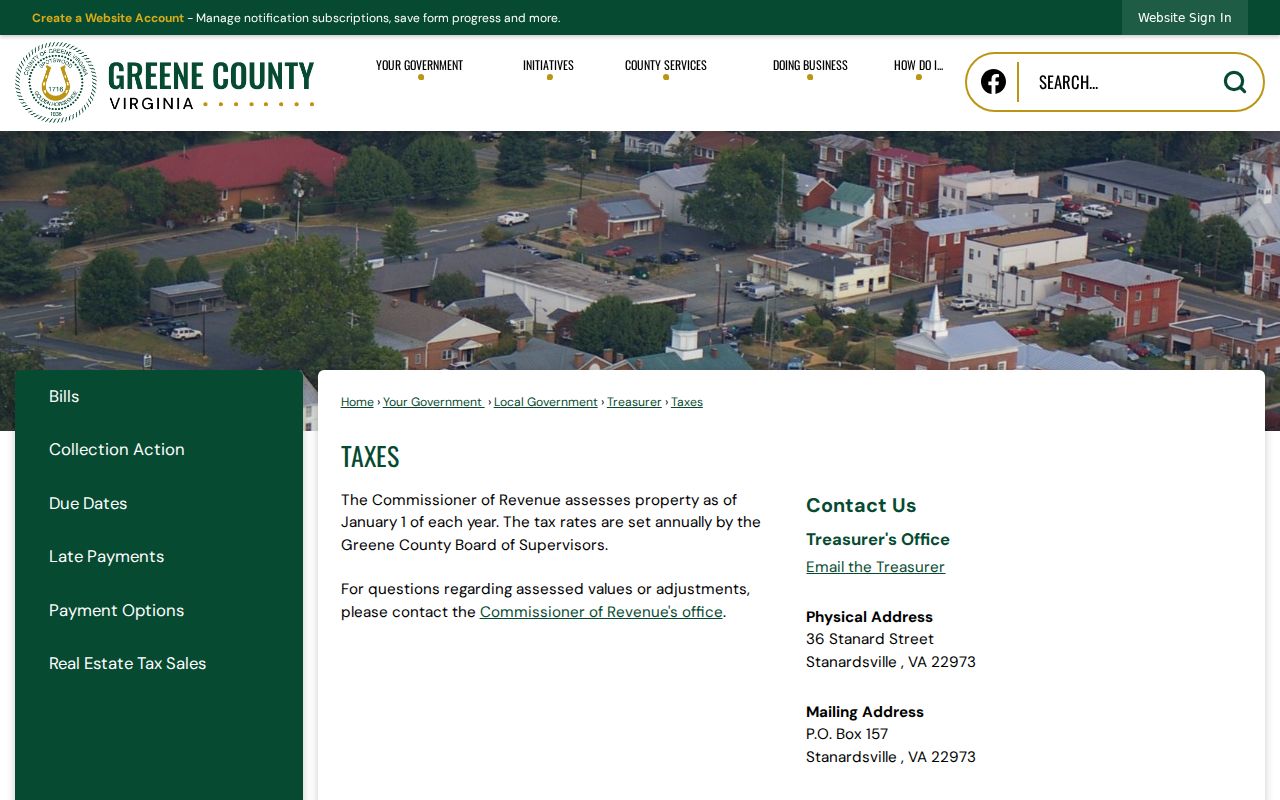
Check the county's own tax page to confirm the billing dates for any given tax year.
Greene County Treasurer Portal Access
The Treasurer's BAI payment screen asks for User Name. It also asks for Password and Company Number. Those are login fields, not search fields for an open parcel record. The County tax page links to the service. The county publishes no public bill lookup or sample bill result there. Knowing the difference keeps a payment sign-in screen from being mistaken for the public property record.
For a bill copy, a payment date, or delinquent status, use the Treasurer's contact channels. The office sits at 36 Stanard Street, P.O. Box 157, Stanardsville, VA 22973, phone 434-985-1456. Its web pages also link collection action, due dates, payment options, and judicial tax-sale notices. The County tax page lists no card convenience fee, so confirm all costs before paying. The Greene Treasurer BAI page is the payment system behind that screen.
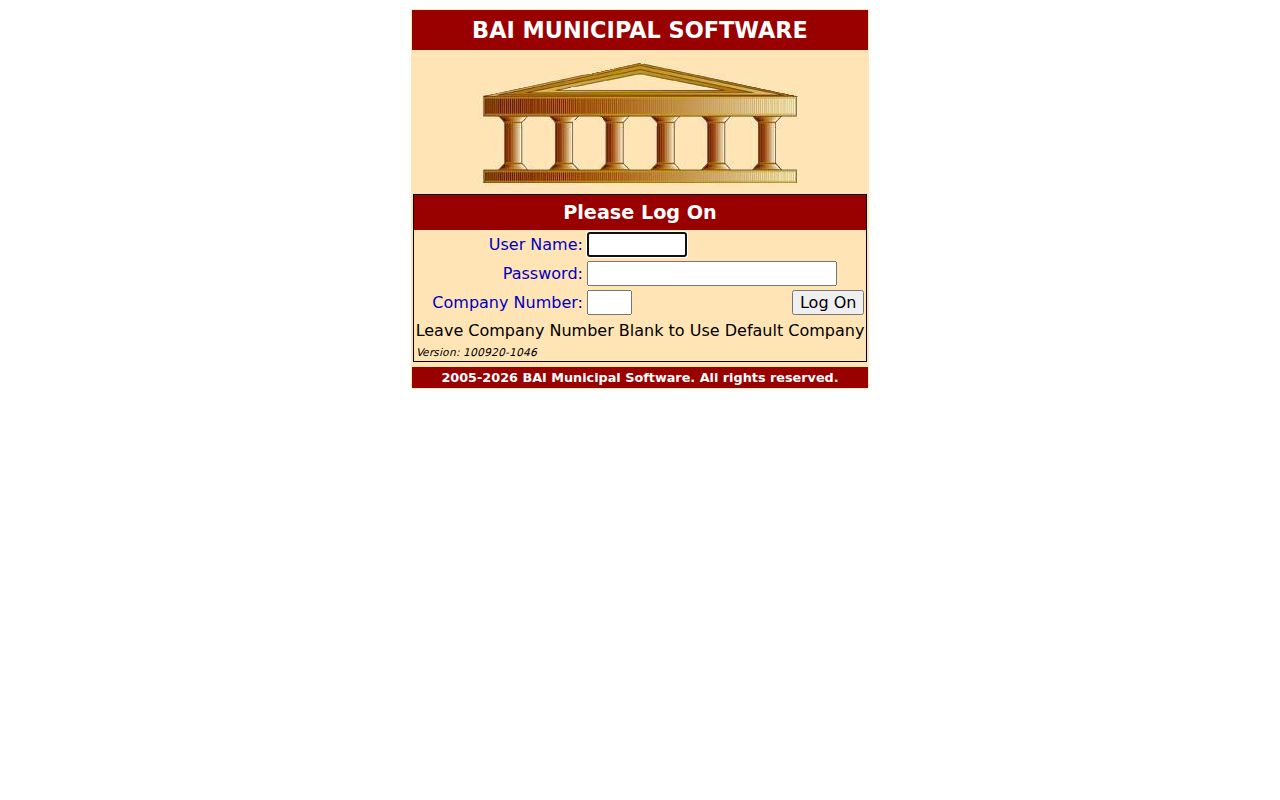
Skip the portal login and simply call the Treasurer if it blocks you. Ask which public route handles your bill question.
Greene County Land Use and Tax Relief
The Commissioner of the Revenue runs Greene County's land-use and tax-relief programs. The office also keeps real-estate ownership records for the county. Current program rules and application steps live on the Commissioner's page. Never assume a parcel qualifies based on looks or acreage alone. Eligibility rules and filing steps are local, set by the Commissioner, and no complete eligibility list is published in one place.
Keep program treatment separate from the underlying assessment. A parcel can carry a land-book value and a special program status at the same time, and the second can change the tax math even when the first stays put. Comparing two parcels? Check that the assessment year and program status match first. The Treasurer answers bill questions; the Commissioner handles assessment and program entries.
Greene's Commissioner of Revenue page lists real-estate responsibilities and local programs.
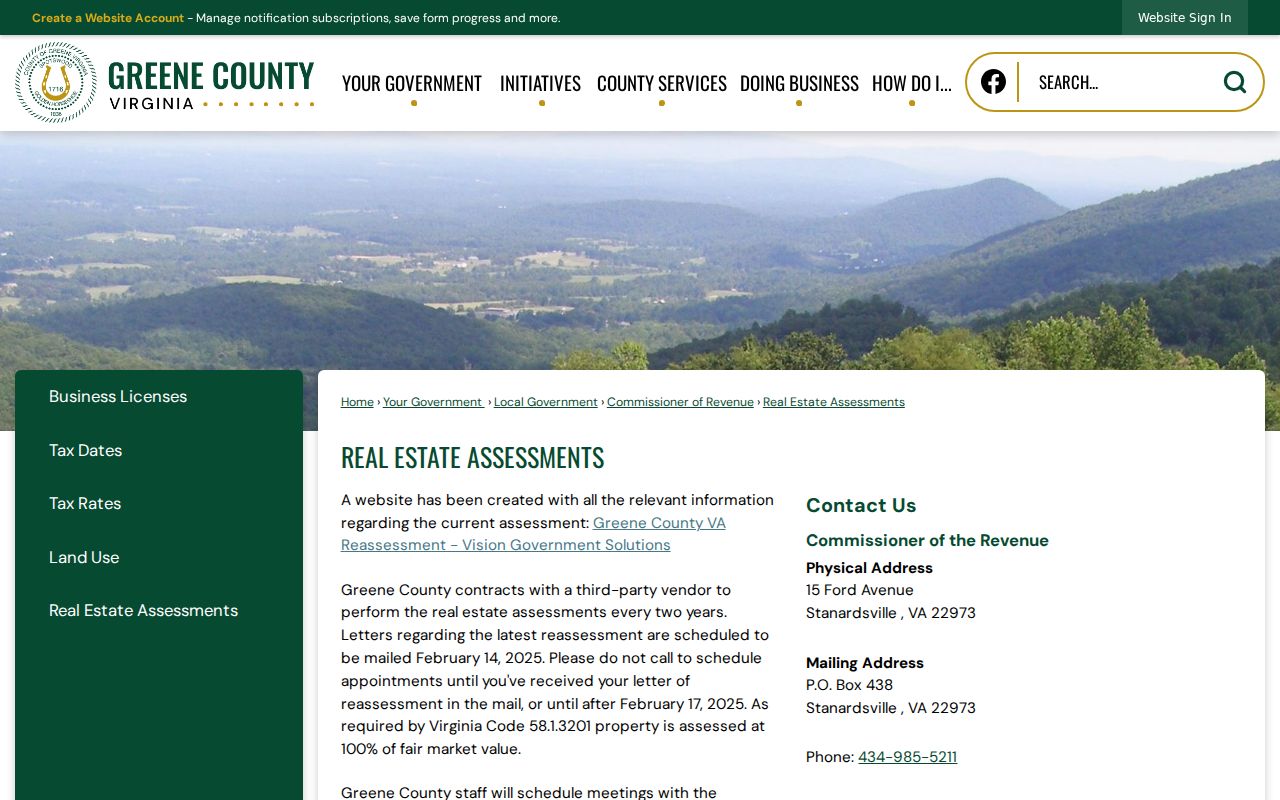
Follow the office's current instructions. A program summary from another locality may not apply here.
Greene County Judicial Tax Sale Records
Greene County posts judicial tax-sale properties on the Treasurer's sale page. This happens once a sale date is set. A delinquent balance alone is not a scheduled sale. The two statuses are distinct, and treating them as the same leads to bad conclusions. Read the official notice itself for the parcel number, owner, dates, and contact details. Then cross-check that parcel in WebGIS. Pull the Clerk's land records or court file for related instruments.
Maps and tax balances cannot tell you sale terms. They also cannot tell you redemption rights, title exceptions, or surplus amounts. Those details come from the notice and the court process. An address that seems to match a noticed parcel still needs verification. Confirm the legal description and parcel ID with the Treasurer before acting.
The Greene County real-estate tax-sale page is the official source for notices. It publishes them when a date is set.
Evidence for a Greene County Value Review
Start a value review by saving the assessment notice and pinning down the parcel. Then gather your evidence. Compare the facts that drive value: land area, access, age, improvements, use, and condition. A recent sale can support your case. But it may not be comparable to a different lot or structure. Greene's reassessment material says the project reviews sales and aims for equalization across parcels. Any difference you claim should rest on records. Those records must tie to the same parcel and the same valuation year.
Ask the Commissioner of the Revenue about the assessment process. Also ask about the Board of Equalization route the County describes. The 2027 project notice offers an informal-review stage first. A final appeal stage comes later. Follow the date printed on the notice. Ask which documents the reviewing office accepts before you submit. A tax bill question belongs to the Treasurer. The evidence for assessed value belongs with the review itself.
The Greene County real-estate assessment page gives the County's appeal framework. Use the current County instructions to confirm the appeal path. It also lists required documents for any notice.