
Greene County Deed Records and Instruments
The Greene Circuit Court Clerk serves as the county's land recorder. At the counter or in the index, you can trace transfers and deeds of trust. Releases, easements, and subdivision plats are there too. Judgments, liens, and lis pendens show up in the same records. So do trustee deeds, correction deeds, and estate instruments affecting real estate. A deed records a conveyance. A deed of trust records a security interest. A release or satisfaction can clear that claim in a later filing. Read the actual instrument. It shows the parties, the legal description, and the stated purpose.
| Deed Type | What It Does | Common Use |
|---|---|---|
| Deed | Records a conveyance of an interest in land | Follow a transfer between grantor and grantee. |
| Deed of trust | Records a security instrument tied to real estate | Look for the later release or satisfaction. |
| Trustee deed | Records a transfer by a trustee | Review the referenced deed of trust or sale. |
| Correction deed | Records a corrective instrument | Compare it with the prior deed reference. |
| Plat or easement | Records a land division or property right | Read with the legal description and survey. |
Ownership does not change with every land record. A lien or deed of trust can be recorded against property, and a later release or satisfaction may clear the claim. A plat may simply define a lot arrangement. Read the document type, date, book/page or instrument number, and parties together for the full picture.
Using Greene’s Grantor-Grantee Index
Grantor means the party who conveys an interest. Grantee means the party who receives it. A grantor-grantee index is a name-based route into the recorded book or image. Start with the latest grantee to find a purchase. Then use that deed's grantor to reach the prior transfer. Greene's live search labels and deed-type dropdown are not published publicly. Confirm the available filters in SRA or with the Clerk. Do not assume every option exists.
- Search the current grantee name and note every likely deed reference.
- Open the instrument and copy the legal description, date, grantor, grantee, and prior reference.
- Search the grantor as a grantee to locate the acquisition before that transfer.
- Repeat with name variants and estate or trustee names; record gaps for a counter or archive search.
- Grantor
- The party named as conveying an interest in the document.
- Grantee
- The party named as receiving that interest.
- Chain of title
- The sequence of recorded transfers used to follow an ownership history.
- Book/page or instrument number
- A reference that identifies a recorded item; copy it exactly when requesting an image.
Requesting a Greene County Deed Copy
Virginia SRA treats index access and images as separate things. Images go only to subscribers authorized by the individual clerk. Free index-only use depends on local settings. Greene's current online cutoff, local subscription setting, and land-record copy fee are not published. Cash, check, money order, and cards are accepted. A $2 convenience fee applies to transactions under $50. Other card transactions carry 4 percent. Verify the current copy charge and delivery method before ordering.
A written request works best with specifics. Include the instrument type, grantor and grantee, and approximate recording date. Add the Tax Map/Parcel ID, legal description, and any book/page or instrument number. Say whether you want an ordinary or certified copy. Greene's Clerk sits at 22 Court Street in Stanardsville. Land-record recording ends at 4:00 p.m., and the office stays open on weekdays until 4:30. Ask whether staff can search or mail a copy. Ask as well about a public terminal or microfilm.
Recorded, not guaranteed. The Greene County deed index identifies instruments placed in the record; it does not certify that title is clear or list unrecorded interests. Use a title professional for a complete title review.
Greene County SRA Index and Image Access
Virginia Secure Remote Access is the statewide portal for land-record information. Greene is served by the Circuit Court Clerk. The Clerk's page also describes the local land-record office. The SRA help page draws a firm line between an index entry and an image. Images go only to subscribers authorized by the individual clerk. Index access is free only where the clerk has enabled it. Greene's exact online cutoff and subscriber setting are not published. The Virginia SRA land-record information page explains index and image permissions.
An index entry may appear, but its image will not open. Write down the instrument number, recording date, names, and any book/page reference. Then call the Clerk. Ask whether the image is available at a courthouse terminal. Ask about clerk-authorized subscription or copy request. An index hit gives a reference only. It may not show the full legal description. It may not show the signatures on a Greene County deed.
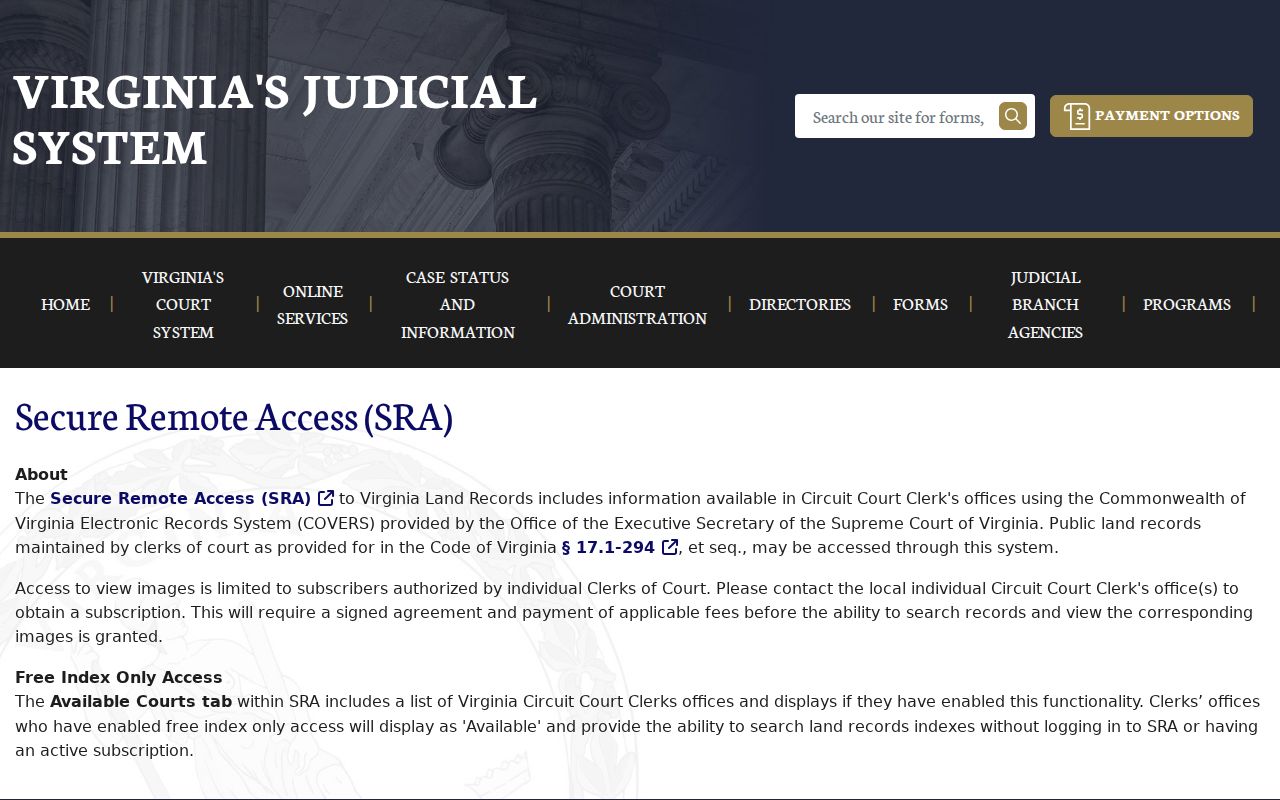
When the image is restricted, use the instrument reference to ask the Greene Clerk for the source document itself.
Greene County Deed Books Before Online Images
The Library of Virginia finding aid lists Greene's Deed Books 2 through 11. Holdings span 1838 to 1900. The General Index to Deeds covers 1838 through 1912. Judgment-lien dockets reach through 1919. Chancery indexes, chancery orders, will books, and fiduciary books are listed as well. These runs continue the trail. A web index may stop short, or a scan may be missing.
Deed Book 1, covering 1838 to 1841, was lost during the Civil War. Water damaged some court volumes in a 1979 courthouse fire. Greene County formed from Orange County. A title chain may cross into Orange County records before 1838. A missing volume or name in the earliest run calls for a wider search. Look across predecessor records, chancery, judgment, and estate materials. The first web hit is not the first owner. The Library of Virginia Greene finding aid identifies reel numbers and record coverage.
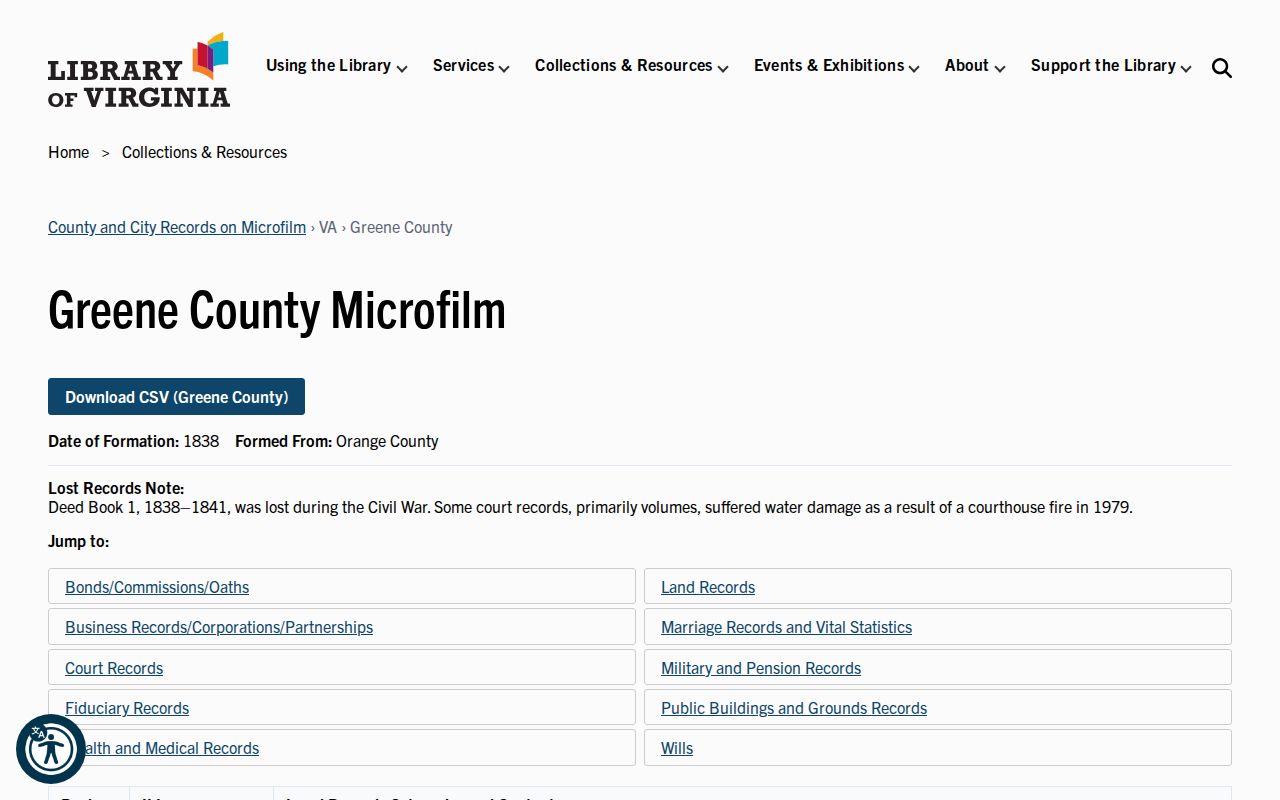
Check reel and book spans before requesting older copies from a library or the Clerk.
Greene County VADeed Alert Notices
A free name-monitoring service comes from the Greene County Clerk's Land Records Division. It is worth a look. VADeed Alert sends a notice whenever a new land record matches a name you register. You can list more than one spelling. You can add Tax Map or parcel IDs too. That breadth matters. A filing might sit under a maiden name, a spouse, a company, or a parcel. It may not appear under the name you expect. Each message lists the instrument number, its type, and the filing date. Treat it as a signal that a property record deserves a closer read. It is not a verdict on it.
The notice itself makes no claim about validity. It also skips the historic deed index entirely. When a message looks unfamiliar, pull the underlying record or call the Clerk. Save the notice. Then verify the Clerk's contact details on your own instead of trusting a link inside an email. Review your registered names and parcels now and then, and delete entries you no longer need. Registration runs through the VADeed Alert portal that Greene County links from its site. A few minutes of setup keeps Greene County property records on your radar. That coverage holds between deed searches.
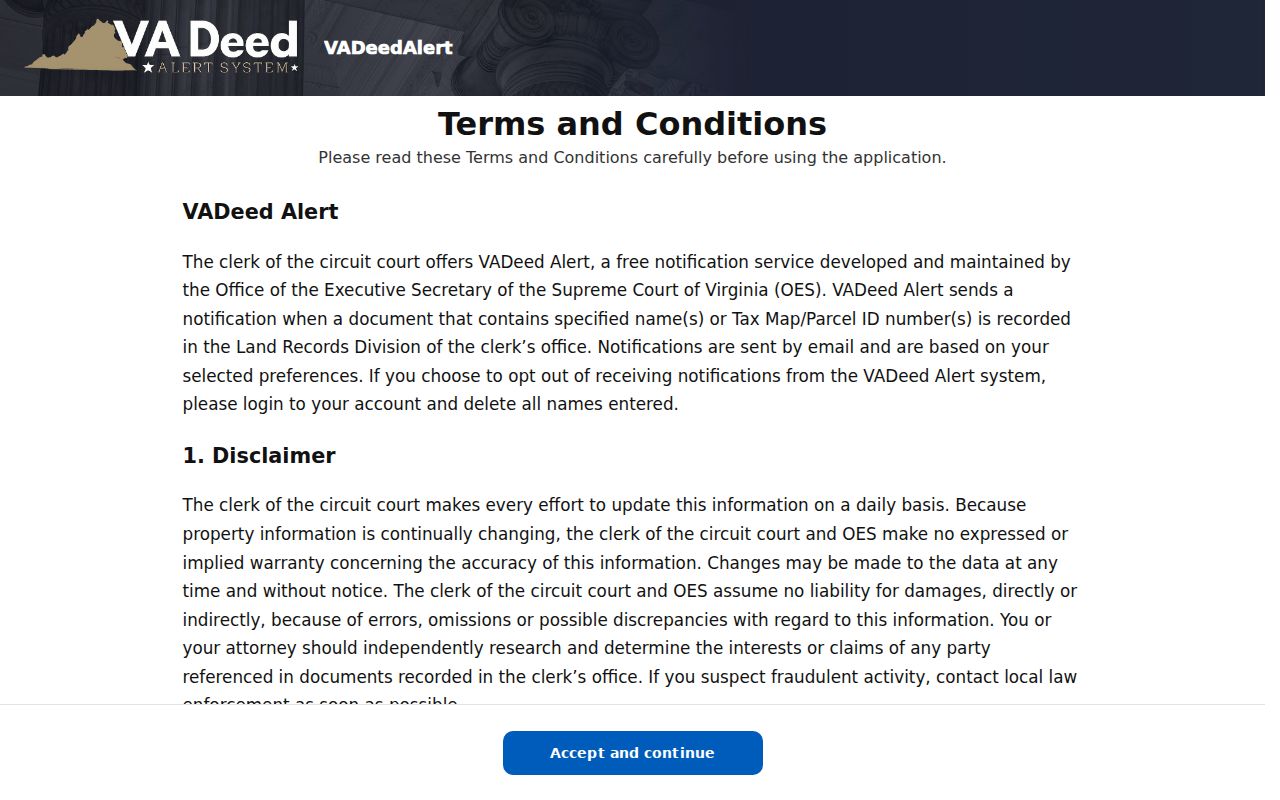
Treat a notice as a nudge to pull the recorded instrument, never as the last word on title.
Greene County Estate Deeds and Probate
An owner's death can snap an otherwise clean deed chain in Greene County. The Circuit Court Clerk holds estate qualifications. The land index may show an executor or trustee deed, a conveyance from heirs, or another court instrument touching the parcel. Older material sits with the Library of Virginia. Its finding aid covers Will Book 1 from 1838 to 1860. It also lists later will runs, indexes reaching 1979, and fiduciary books that begin in 1850 and run well into the twentieth century. Those volumes often explain how a parcel changed hands. The deed records alone may stay quiet.
Start with the current grantee in the land index. Does the next instrument name an estate, executor, administrator, or trustee? Then pull the probate file along with the deed index. The estate papers may show authority or timing. The recorded deed ties the change to the land itself. A will, standing alone, rarely tells the whole conveyance story. The Clerk or the Library of Virginia can confirm one thing. It tells whether a given book or reel covers the date you need. The Greene County Clerk's information page lists estate qualifications among the office's records. That is handy before you search.
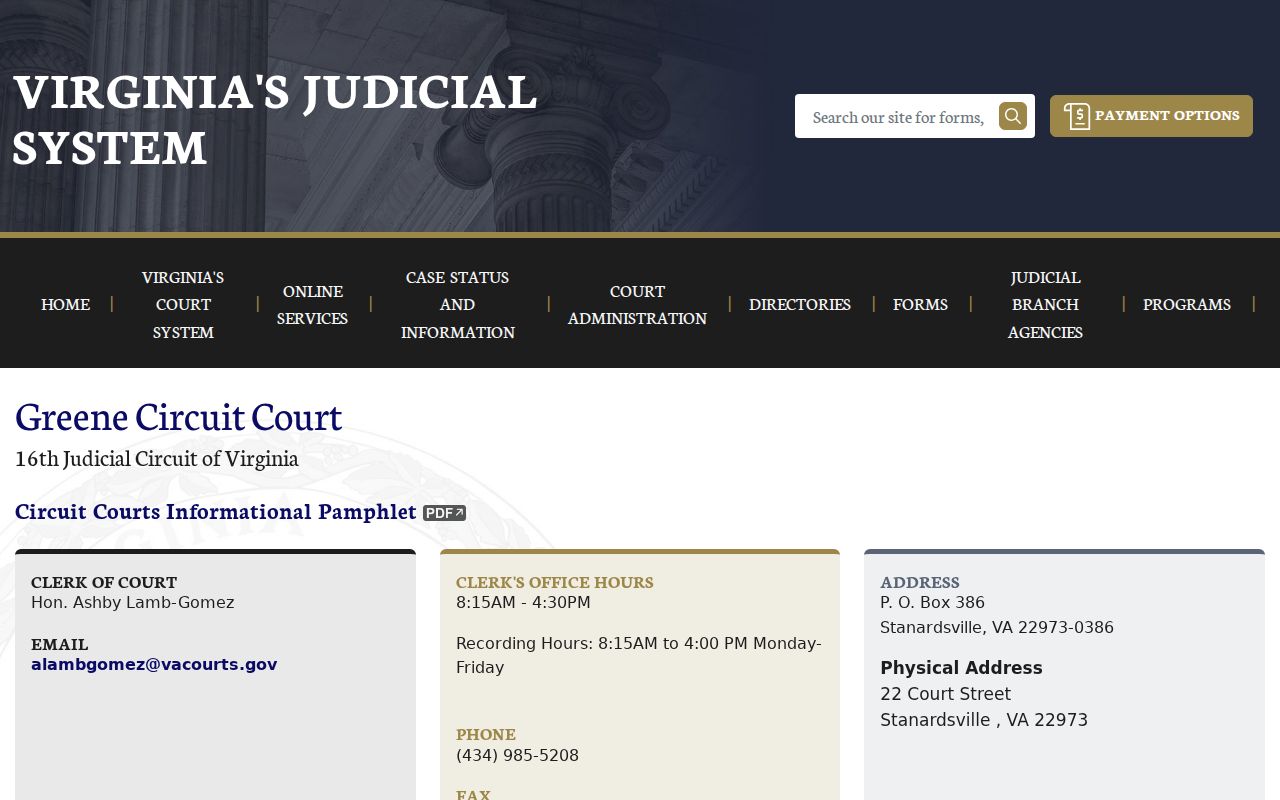
Write down both the probate reference and the land-record instrument so the two trails line up side by side.
Greene County Plats and Source of Title
A recorded subdivision plat can link a parcel map to the deed book. That deed book is where the parcel came from. Greene County's ordinance spells out what a preliminary plat must show. The list includes the subdivision name, tax parcel numbers, source of title, the original date, the owner or subdivider, and the surveyor or engineer. The final plat goes further. It ties title certification to a specific deed book and page or instrument number. It names every affected parcel. The plat also carries signatures, easements, dedications, and approval marks.
Timing carries real weight here. The county requires the plat to be recorded within six months of the Subdivision Agent's approval signature. Otherwise the approval lapses. That makes a planning approval and a recorded plat related but distinct property records. Check Planning and Zoning for the application file first. Then search the Clerk's index for the final recorded plan. A deed may name a lot that the map no longer shows. Compare the source-of-title reference against the later plat first. Draw conclusions only after that. The Greene subdivision ordinance spells out the required plat details.
Greene County Deeds of Trust and Liens
Land records in Greene County reach well beyond simple deeds. The index holds deeds of trust, releases and satisfactions, easements, judgment liens, mechanic's liens, lis pendens, trustee deeds, and correction deeds. One trap deserves mention: a paid loan never disappears from the index on its own. You need the separate release or satisfaction to close that loop. Judgment liens add their own wrinkle. Indexing often runs by party rather than by parcel. Search the owner name, then match any hit to the legal description.
Foreclosure and tax questions call for more than the deed index. Pair the land records with court case files and Treasurer sources. A tax-sale notice runs on the county's official sale page once a date is set. A lis pendens may point toward litigation. Yet the index can miss later pleadings or orders. Use the court portal for case metadata. Ask the Clerk about file retrieval or copies. Greene's historic judgment-lien dockets offer one more route when an encumbrance question stretches back past today's online tools. Older deed records and lien books still earn their keep.