
Greene County Former Owners by Deed Link
Build a backward chain from the latest deed. Each transfer carries a date, a grantor, a grantee, a document type, and a reference that points to the next deed back. Keep a working table of each link. A shared address alone is not evidence of ownership. Greene County's online index reaches only so far back, and the exact cutoff is not published. Fill the table from the deed records themselves rather than from guesses, because no sample owner data belongs in the chain.
| Transfer step | Grantor to grantee | Instrument reference | Next search |
|---|---|---|---|
| Current deed | Current grantee from the record | Copy the Clerk reference | Search the grantee’s acquisition deed. |
| Prior acquisition | Prior grantor to current grantee | Record the date and book/page or number | Search that grantor as an earlier grantee. |
| Earlier transfer | Continue with the next named parties | Match the legal description | Repeat until an index or book limit appears. |
| Older source | Use predecessor, probate, or court records | Note reel, book, or case reference | Ask the archive or Clerk for the source. |
The current deed's grantee is the first prior-owner clue. A shared surname proves nothing on its own. The property description, parcel number, and recording reference should line up at every link in the deed records. When a deed points to an estate, a trustee, or a plat, follow that record set and come back to the land index with the reference.
Reading Greene County Deeds in Reverse
Greene County's Circuit Court Clerk keeps the land records. SRA provides the statewide index. Its exact Greene search fields, document dropdown, and web cutoff are not posted, so plan to explore the interface itself. Search each name in both grantee and grantor roles. When spelling, a middle initial, a married name, or an entity form changes across the years, test every variation and compare the legal description before joining entries.
- Locate the newest deed that matches the parcel and note its grantee and reference.
- Read the grantor and search that party as a grantee in the earlier index.
- Compare the full legal description and record date at each link.
- When the index ends, note the date and consult the deed-book and archive finding aids.
- Grantor
- The party transferring an interest in the recorded instrument.
- Grantee
- The party receiving that interest.
- Chain of title
- The ordered sequence of transfers tied to a parcel.
- Legal description
- The land description used to check that two older records concern the same property.
Greene County Index and Image Access
Virginia SRA is the statewide index path for Greene County land records. Index access and image access come as separate levels. Virginia Courts says images are limited to subscribers authorized by the clerk, while a free index exists only where the locality has enabled it. Greene's own cutoff and subscription setting are not stated. Record the instrument reference anyway.
The Circuit Court Clerk sits at 22 Court Street in Stanardsville. The office holds the land records. Weekdays run from 8:15 a.m. to 4:30 p.m., and recording stops at 4:00 p.m. Ask about a public terminal or a counter copy. A written request is another route, but confirm the current copy fee before sending payment.
The Virginia SRA information page explains remote land-record access.
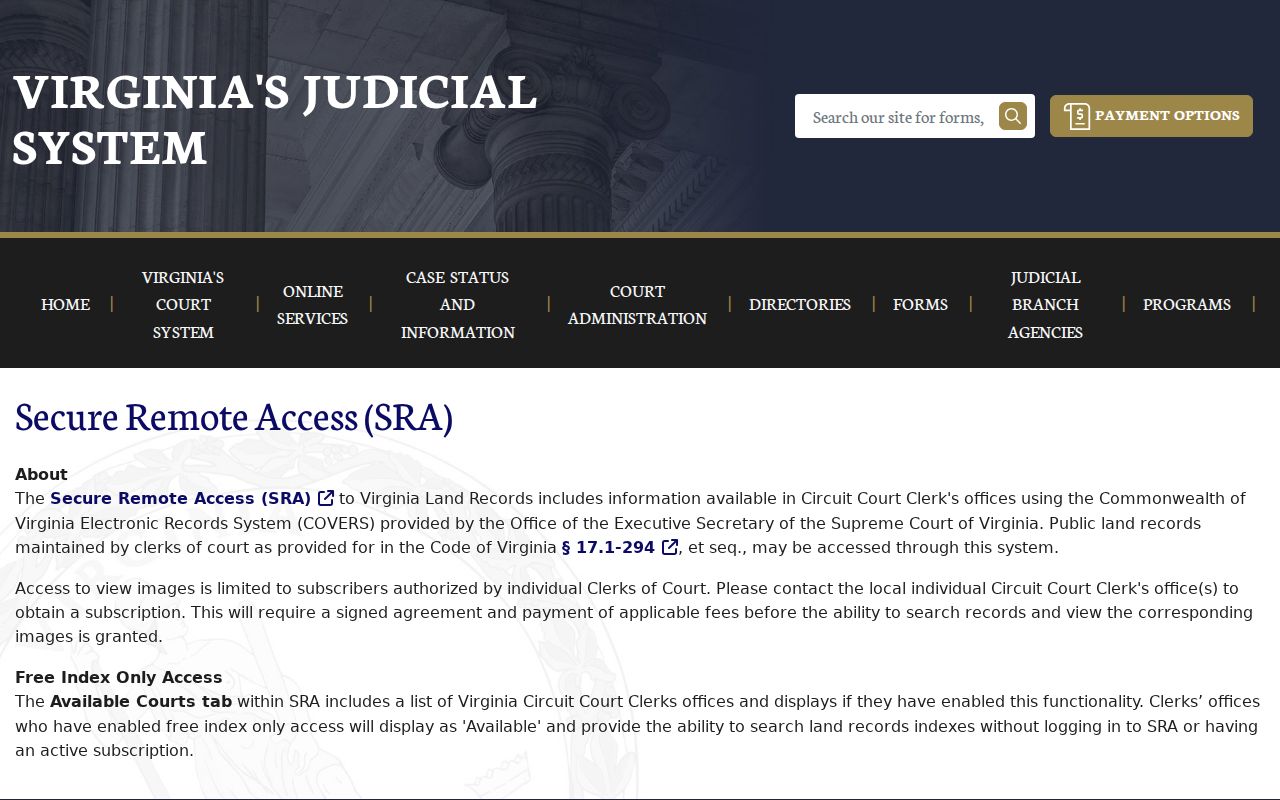
A parcel index reference speeds up any counter request for older deed images.
Greene County Historic Deed Book Runs
The Library of Virginia offers a finding aid. Its deed holdings run deep. The aid lists Deed Books 2 through 11, the General Index to Deeds, judgment-lien dockets, indexes to judgments and deeds, chancery material, wills, and fiduciary books. Some reels travel by interlibrary loan. The catalog lists what exists, though, so plan on checking the book itself.
| Record series | Known span | Why it helps |
|---|---|---|
| General Index to Deeds No. 1 | 1838–1912 | Find early party names and book references. |
| Deed Books 2–11 | 1841–1900, with listed runs beginning in 1838 | Read the instrument after locating an index entry. |
| Judgment-lien dockets | 1844–1919 in listed runs | Check a parallel claim or party entry. |
| Wills and fiduciary books | Books and indexes through 1979 | Explain estate transfers and authority. |
Use the Library of Virginia Greene finding aid to identify a reel or book.
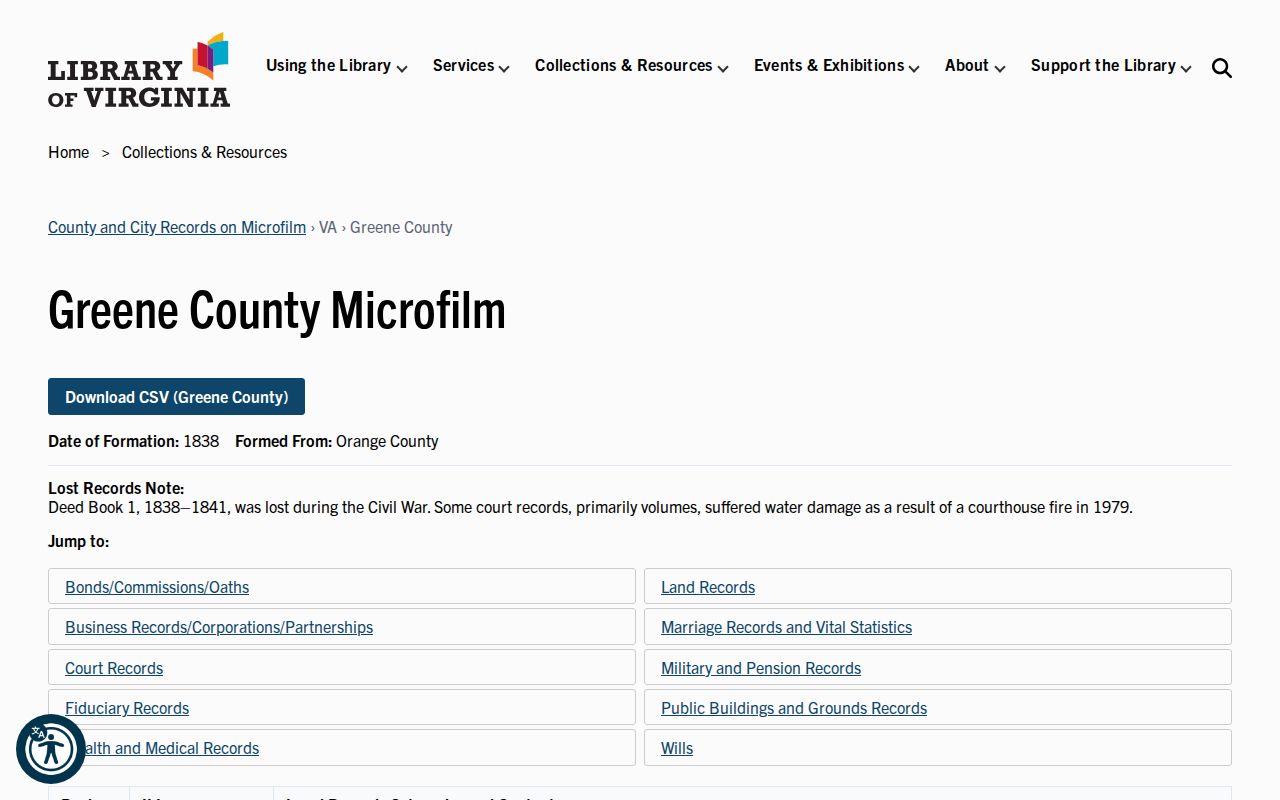
Check the deed series and its date span before asking a library to locate the relevant reel. The parcel number and book reference help narrow the search.
Orange County Before Greene Records Begin
Greene County did not exist before 1838. It was carved from Orange County. Any deed dated earlier belongs in Orange County's land records, even when the same farm or family name shows up in Greene today. Keep the old legal description. Adjoining-owner language matters too, since a modern street address may not appear in the older instrument.
Use the Greene deed chain to find the first transfer that crosses the 1838 county line. Note the grantor, grantee, date, and book reference there. Then search the matching Orange County index or archive source for the acquisition before it. Greene's Deed Book 1 was lost, and courthouse-fire water damage caused a second break, so tell a predecessor-county gap apart from a missing local book. That distinction saves hours.
Greene County Estate Transfers in a Deed Chain
A sudden jump to heirs is not always a missing sale. Deaths explain many gaps. An apparent move to an executor or trustee may reflect an estate transfer. It is not always a bargain and sale. Greene's Circuit Court Clerk holds the estate qualifications recorded since the county formed. The Library of Virginia lists Will Book 1 from 1838 to 1860. More will books and indexes follow it. Fiduciary books run from 1850 through 1915. When a former owner dies between deeds, search the probate file alongside the land index.
A will says who had authority to act. The deed or court order still ties the transfer to the land. Record the probate and deed references both. Fiduciary instruments hide under several names. Search the person's name, the estate name, and the executor or trustee form. That keeps the chain honest.
Greene County's Circuit Court Clerk page describes probate and land-record duties.
For family-history context, the Virginia Department of Health genealogy page lists the years available for vital-record research. It also lists a $15 fee and an Archives microfilm route.
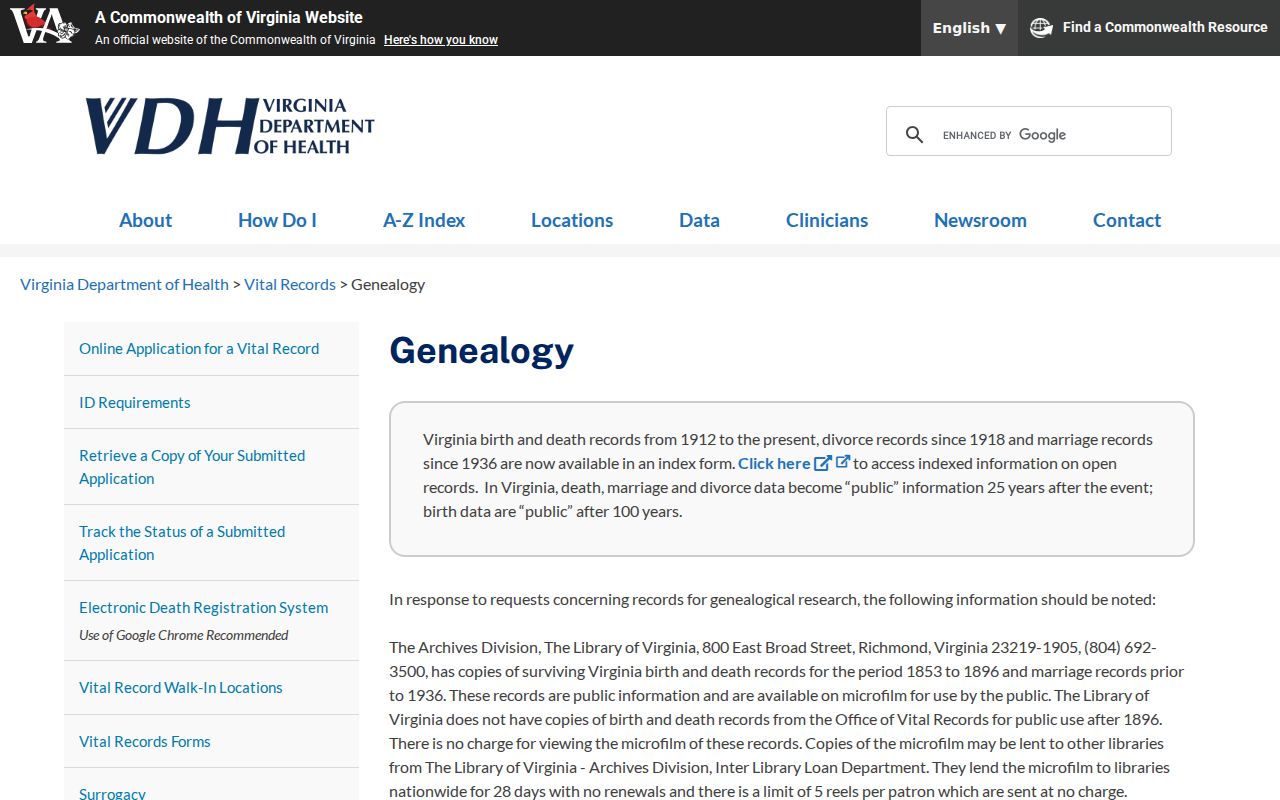
Birth and death records can explain a name change or an estate clue. The deed still proves the transfer.
Greene County Judgment and Chancery Trails
The deed trail sometimes hits a gap. Court records created alongside the land books can fill in the story. The Library of Virginia holds Greene judgment-lien dockets in runs covering 1844 through 1919. It also holds an index to judgments and deeds from 1838 to 1903. Chancery indexes and orders reach into the twentieth century. A judgment docket may reveal a claim against a former owner. A chancery file can hold orders or exhibits tied directly to land.
Neither record proves ownership alone. Treat them as leads. Copy the party names, the date, the docket or reel reference, and any parcel description. Then carry that clue back to the land records, where title actually lives. The Greene Circuit Court portal supplies case metadata for some files. The Clerk keeps the records themselves. A counter visit or a written request may be needed. Court trails are a fallback chain, never a shortcut around the deed. The Virginia Courts Online Case Information System is the official entry point. It serves statewide case searches.
A case search can point you toward the right court file. Ownership, though, is confirmed only through the Clerk's recorded instrument and its parcel description.
Former Owners of Stanardsville Lots
Stanardsville began with a 1794 plan. It carved 45 acres into half-acre lots along an even street grid. An old deed may place a lot by a corner, an alley, or an adjoining proprietor. It may do so instead of using a street number. That makes physical anchors useful. The courthouse square, the Main Street district, and the Lafayette Inn give researchers landmarks. Match these against a deed description. None of them proves title or a parcel edge.
The Greene County Historical Society offers a descendant database of more than 100,000 people. It also accepts research requests. Its material can explain a family name or a migration clue inside a deed chain. Use it for context. Then confirm every transfer with the Clerk's deed, probate, or court record. The Society sits at 360 Main Street in Stanardsville. Its genealogy and research page describes its local history resources.
Family history helps test whether a name belongs in the chain, but the recorded instrument remains the true source of ownership.
How Far Back Greene County Ownership Records Reach
How deep do Greene County ownership records go? The current online index has no confirmed last year. The Library of Virginia finding aid offers a known historic route instead. Its General Index to Deeds covers 1838 through 1912. Surviving deed books run from Book 2 through Book 11. Deed Book 1, holding the 1838 to 1841 records, was lost during the Civil War. For earlier deeds, rely on the Clerk and archive sources. Do not guess where a digital cutoff falls.
Greene County formed from Orange County in 1838. A property chain can therefore reach back into Orange County records before Greene existed. A missing image may trace to the lost first book. It may also trace to water-damaged court volumes from a 1979 courthouse fire. When a clean sequence breaks, compare sources side by side. Use deed indexes, chancery orders, judgment liens, wills, and fiduciary books together.
Lawful use. Trace former owners for house history or a property review. Do not use records to follow, expose, threaten, or harass a living person; Virginia law addresses stalking in Va. Code § 18.2-60.3.